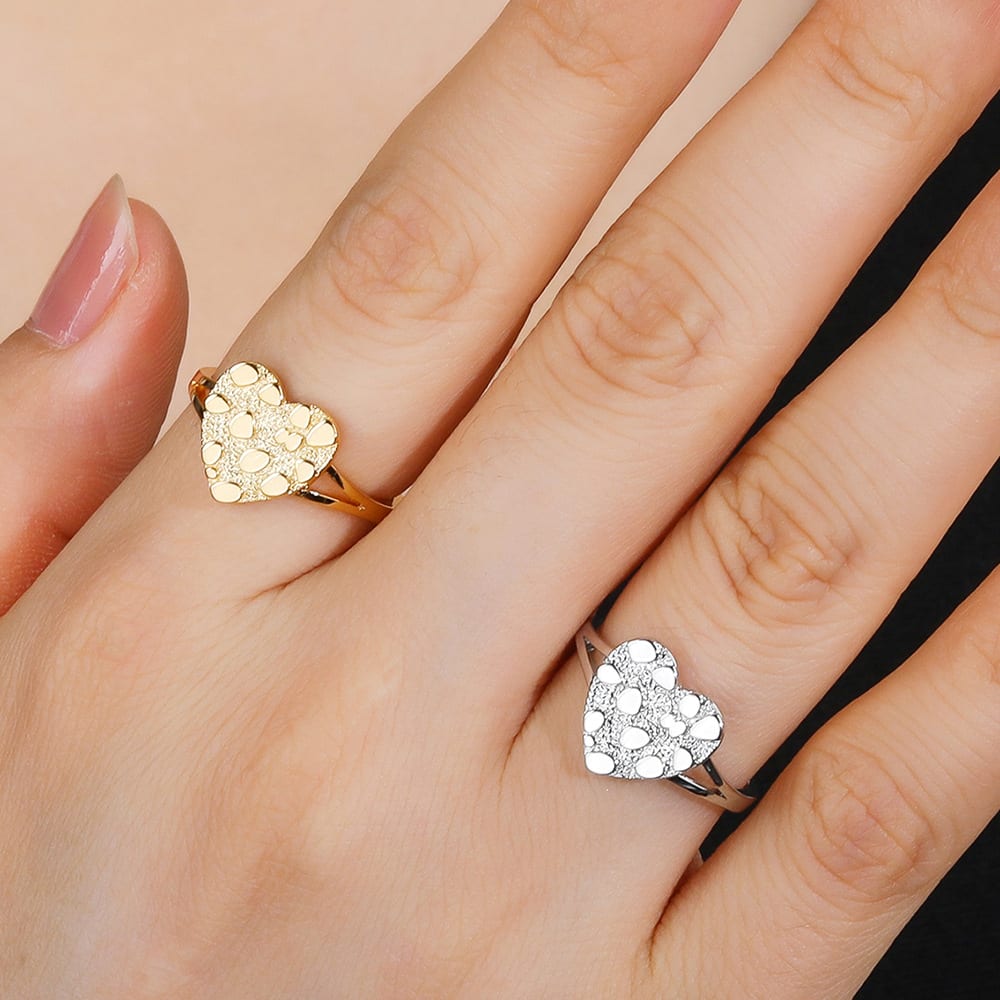
An eternity ring is a narrow band set with diamonds or coloured gems all the way around — no beginning, no end, one continuous line of stones. The design is both a statement and a mathematical choice that shapes how, and when, the ring can be worn.
What eternity rings symboliseThe unbroken circle of stones is one of the oldest visual metaphors for lasting love. Each stone represents a promise without end; the absence of a focal centre stone shifts the attention onto the relationship itself rather than a single moment.
Traditionally an eternity ring is given:
- On a milestone anniversary — the 10th, 15th, 25th or 40th.
- At the birth of a first child, sometimes called a "push present" in modern usage.
- As the wedding band itself — an increasingly popular choice, especially in minimalist settings.
- As a replacement for the engagement ring after decades of wear, when resetting feels right.
There are two principal formats:
- Full eternity: diamonds set continuously around the entire band. Visually flawless from every angle, but with two practical consequences: it cannot be resized, and the stones touching the palm can create a hard feeling against adjacent fingers.
- Half eternity: diamonds across the top half (~ten o'clock to two o'clock from a top-down view), plain metal underneath. Resizable, more comfortable, visually identical when worn because the stones show only on the upper surface.
For most wearers the half eternity is the practical choice. Choose full eternity only when you are certain of the ring size and want the symbolism of the unbroken circle.
Setting stylesThe way the stones are held determines the band's personality:
- Prong (claw) setting: small metal prongs hold each stone individually. Maximum brilliance; catches on fabric if prongs are long.
- Channel setting: stones sit inside two parallel walls of metal. Smooth edges, excellent protection, slightly less brilliance.
- Bezel setting: each stone is surrounded by a thin collar of metal. The most secure and the most modern-looking.
- Pavé setting: tiny diamonds held by micro-prongs, creating a shimmering "paved" surface. Beautiful but demands skilled craftsmanship.
- Shared prong: adjacent stones share their prongs, showing more diamond and less metal. A classic look.
Diamond is the traditional choice, but eternity rings in coloured stones are having a revival:
- Sapphire (blue, yellow, pink or teal) — extremely durable, rich colour.
- Ruby — the classic red, a passionate alternative.
- Emerald — stunning but more fragile; best in bezel settings.
- Mixed stones — alternating diamond and coloured gems, or every stone a different colour, for an unconventional statement.
For daily wear, stick to stones rated Mohs 8 or higher. Sapphire and diamond eternity bands survive decades; opal and pearl eternity bands do not.
How to stack and styleAn eternity ring pairs beautifully with most other rings, but there are some elegant rules of thumb:
- As a wedding band: pair with an engagement ring of matching metal and setting style.
- As a stacking ring: mix with plain bands and solitaires in the same metal family.
- As an anniversary ring: wear on the right hand if the original wedding ring is on the left — this becomes increasingly popular after 25 years.
- Mixing metals: yellow, rose and white gold can coexist beautifully if the widths and finishes are consistent.
Price depends entirely on total carat weight and stone quality:
- 0.50–1.00 ct total diamond weight in 14k/18k gold — accessible entry point for most couples.
- 1.50–2.50 ct total — the most-ordered range for 10th-anniversary gifts.
- 3.00 ct+ — statement bands for milestone occasions; platinum settings typical.
Colourless G–H stones of VS clarity are the sweet spot for eternity bands — the stones face up beautifully and the cost is manageable even with 20–30 individual diamonds.
FAQCan a full eternity ring be resized?
Not easily. Goldsmiths can occasionally add a tiny insert, but the result rarely matches the original. Buy the right size the first time, or choose a half eternity.
Will stones fall out over time?
Quality eternity rings rarely lose stones. An annual check-up (free at most fine jewellers) catches loose settings before they matter. Avoid impact and rough work when wearing eternity bands.
Is the wedding-band-as-eternity-band a modern trend?
It has ancient roots — Roman women wore diamond-set bands as marriage tokens — but the explicit "eternity" framing and mass market popularity come from the 1960s. Today it remains one of the most requested wedding-band styles worldwide.
Learn more about wedding ring selection or browse our rings collection.