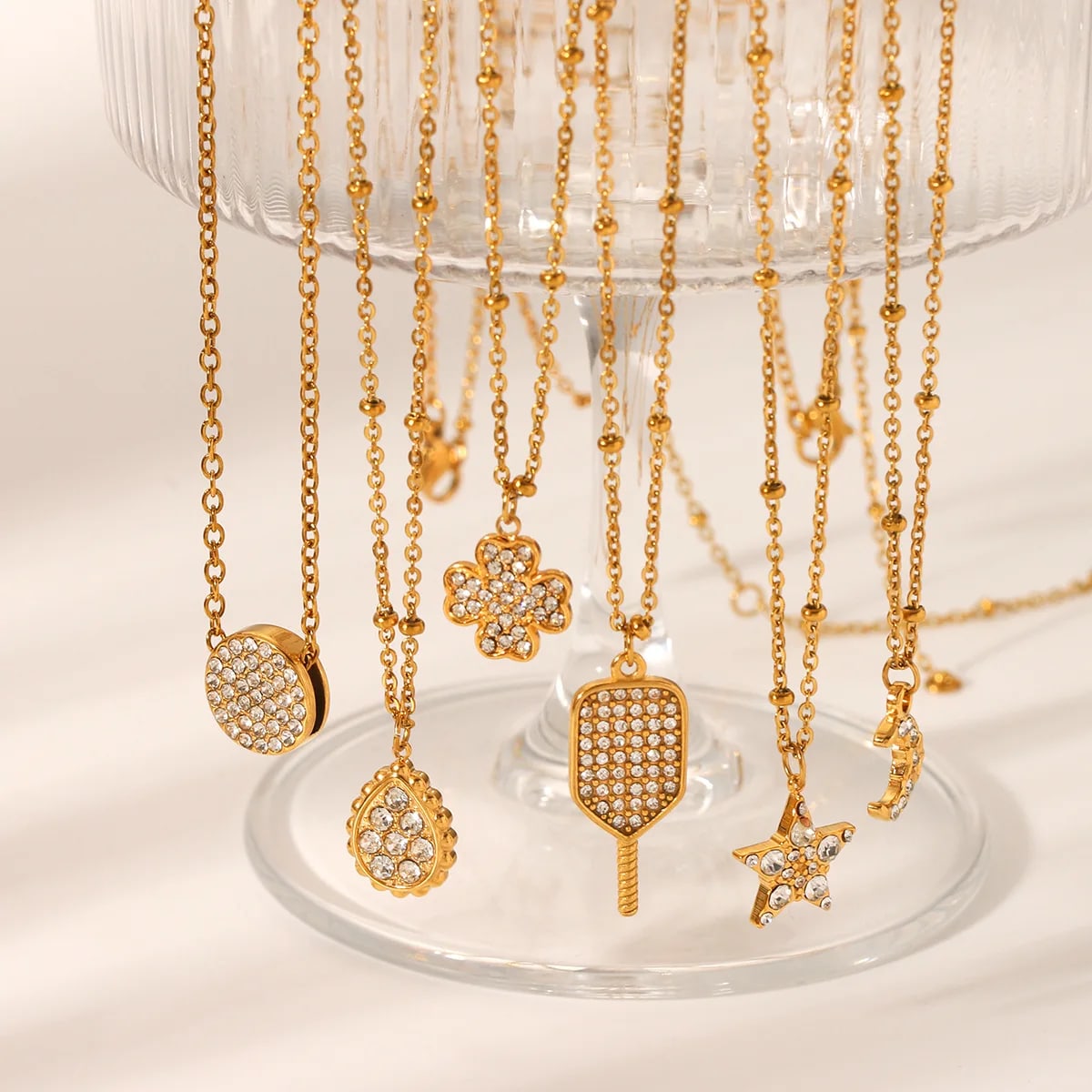
Goldsmithing is the craft of shaping precious metals — and one of the oldest continuously practised skilled trades in human history. Archaeologists have found goldsmith workshops 5,000 years old in Mesopotamia and Egypt, using techniques that are still taught in apprenticeships today. A walk through a modern goldsmith's studio is a walk through an unbroken chain of hand skill.
What a goldsmith actually doesA goldsmith (also called a jeweller-goldsmith in modern usage) is a skilled artisan who:
- Designs and fabricates pieces of jewellery from raw precious metal.
- Alloys gold — mixing pure gold with copper, silver or other metals to achieve the desired karat and colour.
- Forms the metal through rolling, drawing, forging, annealing and bending.
- Joins parts using soldering, fusion welding, or riveting.
- Sets stones in prongs, bezels, channels or pavé.
- Finishes the piece through filing, sanding, polishing, texturing or patina work.
- Repairs and restores damaged or vintage pieces.
The modern goldsmith works in parallel with (and sometimes distinct from) the CAD-based designer, the stone-setter specialist and the polisher. In many fine workshops a single goldsmith still handles a piece from start to finish.
A brief historyGoldsmithing has been continuously practised for at least 6,000 years:
- Ancient Egypt (3500 BCE onwards): gold granulation, hollow work, cloisonné enamel. The tomb of Tutankhamun contained pieces of craftsmanship not surpassed for millennia.
- Greek and Roman (800 BCE–400 CE): refined techniques of filigree, granulation and repoussé. Roman goldsmiths established the first guild structures.
- Byzantine (330–1453): religious iconography and imperial regalia. Complex cloisonné enamelling on gold reached its historical peak.
- Medieval Europe (800–1500): goldsmiths organised into guilds across Europe. Apprenticeships of 7–10 years. Hallmark systems established.
- Renaissance (1400–1600): Italian goldsmiths (Cellini, Ghiberti) became prominent artists. Many Renaissance painters (Botticelli, Ghirlandaio) trained first as goldsmiths.
- Industrial revolution (1760–1900): mechanisation transformed production but master hand-workshops continued; Cartier, Van Cleef & Arpels, Fabergé emerged.
- Contemporary: CAD design and CNC machining handle production; hand goldsmiths specialise in high-end and bespoke work.
Forming
- Rolling: passing metal through rollers to create sheet or strip of specific thickness.
- Drawing: pulling metal through dies to make wire of specific diameter.
- Forging: hammering hot metal into desired shape.
- Annealing: heating metal to relieve internal stress so it can be worked further.
- Casting: pouring molten metal into a mould (lost-wax casting is the most traditional technique).
Joining
- Soldering: joining metal parts with a lower-melting-point solder alloy. Different melting points (hard, medium, easy) allow multiple seams to be made without remelting earlier ones.
- Fusion: melting the edges of two pieces to fuse without solder.
- Laser welding: modern technique using a precise laser beam; used for delicate repairs.
- Riveting: mechanical joins using small metal pins.
Decoration
- Filigree: twisted wire work forming lace-like patterns.
- Granulation: tiny gold beads fused to a surface (Etruscan technique).
- Repoussé and chasing: hammering relief designs from the back (repoussé) and refining from the front (chasing).
- Engraving: cutting decorative lines into the metal surface.
- Enamelling: fusing coloured glass to metal surfaces — champlevé, cloisonné, plique-à-jour.
- Milgrain: a row of tiny beads along an edge, created with a milgrain wheel.
Stone setting
- Prong (claw) setting: small metal prongs hold the stone from above.
- Bezel setting: a collar of metal surrounds the stone.
- Channel setting: stones sit between two parallel walls.
- Pavé: tiny stones held by micro-prongs covering a surface.
- Tension setting: the stone held only by pressure from the band.
A goldsmith's formal training today typically involves:
- Apprenticeship (3–4 years) in a working studio, sometimes formalised through national programmes.
- Trade school or university (2–4 years) covering design, metallurgy, gem identification and traditional techniques.
- Master examinations in some countries (Meister in Germany, Rzemieślnik in Poland, etc.) that formally certify full command of the trade.
- Specialisation (stone-setting, engraving, enamelling, casting) often takes a further 2–5 years.
A working goldsmith's bench carries hundreds of tools. The essentials:
- Jeweller's saw with blades in sizes from 8/0 to 4.
- Files in many shapes — flat, half-round, triangular, barrette.
- Pliers — flat, round, chain-nose, bent-nose.
- Soldering torch and flux.
- Rolling mill and draw plate.
- Hammers (chasing, raising, planishing).
- Ring mandrel, bracelet mandrel.
- Bench pin and bench-top vice.
- Magnifying loupe (typically 10×).
- Gauges and measuring calipers.
- Polishing motor with wheels and compounds.
A piece made by hand differs from a CAD-cast piece in several ways:
- The metal is typically denser and more uniform.
- Joins are stronger (hand-soldered vs. cast as a single piece).
- Fine details show character — slight asymmetries, hammered textures, hand-cut facets.
- Repairs later in life are easier — the craftsman can inspect and work with the original construction.
- Long-term durability is often superior because cast pieces can contain micro-voids.
Most cities have practising goldsmiths, though fewer than in previous generations:
- Fine jewellery houses usually employ goldsmiths in-house.
- Independent studios specialise in bespoke commissions.
- Jewellery quarters (Birmingham UK, Antwerp, Valenza Italy, 47th Street New York) host clusters of goldsmiths.
- Guilds and trade associations (Goldsmiths' Company in London, for example) can refer you to certified craftsmen.
How long does it take to become a goldsmith?
Traditionally 7–10 years to become a fully competent master. Modern apprenticeships shorten this to 3–5 years for basic competency; lifetime mastery continues indefinitely.
Is goldsmithing a dying craft?
It's a quieter one than a century ago, but master workshops survive worldwide. Modern interest in bespoke and ethical jewellery is renewing demand for hand-skilled work.
Can I commission a custom piece?
Yes — many goldsmiths work directly with clients. Expect a 6–12 week process: design, consultation, wax or CAD model, casting or fabrication, stone setting, finishing.
To learn about Art Deco craftsmanship, see Art Deco jewellery; for vintage necklaces see our vintage guide.